
How to Choose an Electronic Connector Manufacturer: Supplier Audit Checklist for Engineering Procurement
By Nick / June 9, 2026
Introduction: How To Choose Electronic Connector Manufacturer Matters
When deciding how to choose an electronic connector manufacturer, the manufacturer you choose determines far more than unit price. It determines your product’s reliability, your supply chain’s resilience, your time-to-market, and ultimately, your end customer’s satisfaction.
A poorly selected connector manufacturer can result in intermittent field failures, delayed shipments, non-compliance with regulatory requirements, and costly redesigns. Conversely, a well-chosen manufacturing partner becomes a strategic asset — helping you optimize designs for manufacturability, navigate supply chain disruptions, and scale production as demand grows.
This guide provides a structured framework for evaluating and selecting electronic connector manufacturers. It is designed for procurement engineers, supply chain managers, and design engineers who need a practical, auditable approach to supplier qualification — from initial capability assessment to on-site audit and ongoing performance monitoring.
If you are currently sourcing connectors for industrial, automotive, or new energy applications, understanding how to properly evaluate a manufacturer will save you time, money, and technical headaches.
Step 1: Define Your Requirements Before You Start Searching
Before evaluating any manufacturer, clearly define your technical and commercial requirements. This foundation will guide every subsequent decision.
Technical Requirements Checklist
| Category | Questions to Answer | Why It Matters |
|---|---|---|
| Electrical Specs | What voltage, current, and frequency range? Signal, power, or both? | Determines contact design, material selection, and testing requirements |
| Mechanical Specs | What mating cycles? Insertion/extraction force? Mating axis orientation? | Influences housing design, locking mechanism, and durability testing |
| Environmental Requirements | IP rating needed? Temperature range? Vibration/shock levels? Chemical exposure? | Determines sealing design, material selection, and environmental test scope |
| Regulatory Compliance | UL, RoHS, REACH, CE required? Automotive (IATF 16949)? Aerospace (AS9100)? | Non-negotiable for market access in target regions |
| Volume & Lead Time | Annual volume? Prototype vs. production timeline? MOQ flexibility? | Determines manufacturing process suitability and pricing model |
Commercial Requirements
- Target Pricing: Per-unit target cost, tooling/NRE budget, annual price reduction expectations
- Payment Terms: Preferred terms (e.g., 30% deposit, 70% before shipment, or net 30/60)
- IP Protection: Will you require NDA signing? Design ownership? Tooling ownership?
- Logistics: Preferred Incoterms, shipping routes, required delivery locations (e.g., Europe, US)
Step 2: Initial Screening — Capability & Compatibility
Create a shortlist of manufacturers that match your fundamental requirements. Use these screening criteria to filter the market:
Capability Screening Criteria
- Core Manufacturing Processes: Does the factory have in-house injection molding, stamping, plating, and assembly? Or do they outsource critical processes? In-house control generally means better quality consistency.
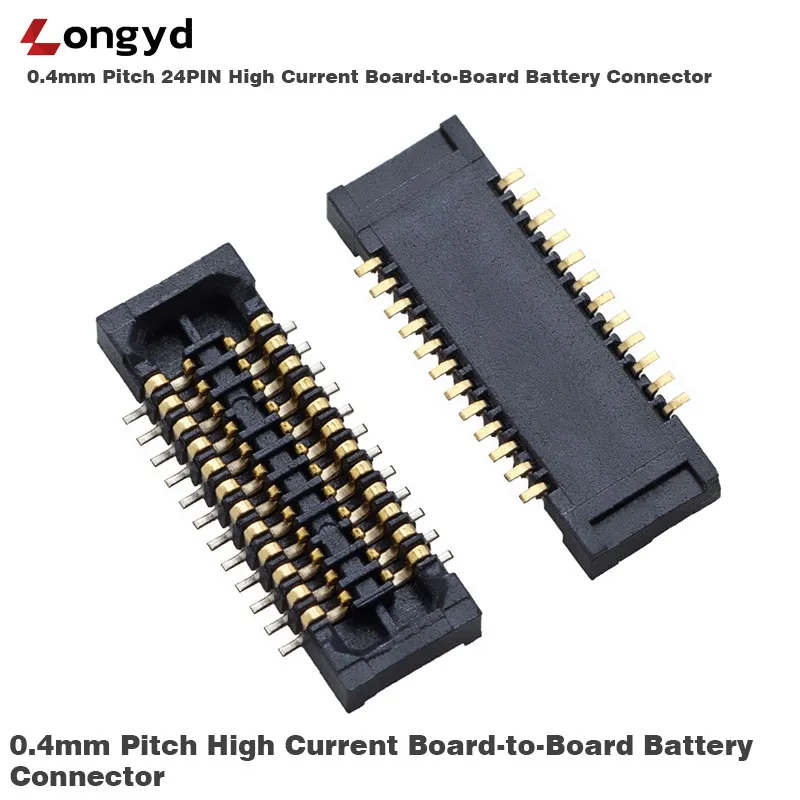
- Product Range Experience: Have they manufactured connectors similar to yours in pitch, current rating, and application? A manufacturer experienced in 0.4mm pitch fine-pitch connectors may not be optimal for heavy-duty power connectors, and vice versa.
- Industry Certifications: ISO 9001-certified is the minimum. If you serve automotive, look for IATF 16949. For medical, ISO 13485. For aerospace, AS9100D. Verifiable certifications are non-negotiable.
- Quality Track Record: Request defect rate data (PPM), customer return rates, and quality performance metrics over the past 12-24 months.
- Reference Customers: Ask for customer references, ideally from clients in your industry or region. European and American B2B buyers should prioritize manufacturers with existing export experience to their markets.
Red Flags in Initial Screening
- Inability or unwillingness to share certification documents
- Very low prices relative to market average (often indicates material or process shortcuts)
- No engineering support or design-for-manufacturing (DFM) feedback capability
- Vague or incomplete responses to technical requirements
- No experience exporting to your target market (may indicate unfamiliarity with compliance requirements)
Step 3: Technical Capability Assessment — What to Look For
Once you have a shortlist, conduct a deeper technical capability assessment. For B2B connector procurement, the following areas are critical:
Tooling & Mold Making Capability
The quality of your connector starts with the quality of the molds and tooling:
- Mold Precision: Ask about achievable tolerance. Precision connectors (pitch ≤1.0mm) typically require mold accuracy of ±0.005mm to ±0.01mm.
- Mold Material: High-quality molds use hardened tool steel (SKD61, S136) with proper heat treatment. Inadequate mold material leads to rapid wear and dimensional drift.
- Mold Maintenance: Ask about preventive maintenance schedules and shot-count tracking systems.
- In-House vs. Outsourced: In-house mold making and maintenance is a strong indicator of manufacturing maturity.
Material Sourcing & Quality Control
Effective quality control begins upstream. See our SMT connector quality control guide for detailed process standards.
Connector performance is fundamentally determined by material quality:
- Contact Materials: Does the manufacturer use verified supply chains for phosphor bronze, beryllium copper, or brass? Can they provide material certificates (mill test reports)?
- Plating Capability: In-house plating vs. outsourced? Plating thickness control (± tolerance), bath monitoring frequency, and adhesion testing methods are all important indicators.
- Housing Materials: Are they experienced with LCP (for high-temperature reflow), PA9T, PPS, PBT? Can they recommend the optimal material based on your application?
- Incoming Material Inspection: Request details on incoming QC procedures — material testing frequency, acceptance criteria, and non-conformance handling.
Production Capacity & Scalability
Assess whether the manufacturer can meet both your current volume and future growth:
- Monthly Production Capacity: Raw output capacity in units/pieces per month
- Lead Times: Typical lead time for prototypes, first articles, and production runs
- Capacity Utilization Rate: Current vs. available capacity — high utilization without expansion plans may indicate delivery risk
- Automation Level: Degree of automation in assembly, inspection, and packaging. Higher automation generally means more consistent quality at scale
Step 4: The On-Site Audit — What to Inspect
Nothing replaces a physical factory audit. Even in an era of video calls and digital documentation, walking the production floor reveals things that documents cannot convey.
Audit Checklist — Production Floor
| Audit Area | What to Check | Pass Criteria |
|---|---|---|
| Housekeeping & 5S | Organization, cleanliness, workflow, labelling | Clean, well-organized, clear material flow, tools properly stored |
| ESD Control | Wrist straps, grounding mats, ESD-safe workstations | ESD protection at all assembly stations handling sensitive components |
| Injection Molding | Temperature control records, mold maintenance logs, scrap rate | Digital temperature monitoring, mold maintenance < 100 shots since last service, scrap rate < 2% |
| Stamping / Contact Forming | Die maintenance, burr control, dimensional verification frequency | Burr height documented and controlled; in-process checks every 1-2 hours |
| Plating Line (if in-house) | Bath chemistry control, thickness verification, adhesion testing | Automated bath monitoring; XRF thickness verification at defined intervals |
| Assembly Line | Operator training, visual inspection stations, pull testing | Certified operators, documented inspection criteria, periodic destructive testing |
| Packaging & Labeling | Anti-static packaging, moisture barrier, label accuracy | Compliant with your packaging specification; labels verified before shipment |
Audit Checklist — Quality Laboratory
| Equipment | What to Verify | Why It Matters |
|---|---|---|
| Micro-ohmmeter (4-wire) | Calibration current, measurement range, recent calibration certificate | Contact resistance verification is fundamental to connector quality |
| XRF Analyzer | Plating thickness measurement capability, calibration standards, operator training | Ensures plating meets specification without under- or over-plating |
| Profile Projector / CMM | Dimensional measurement capability, measurement uncertainty, fixture quality | Verifies critical dimensions on contacts and housings |
| Temperature / Humidity Chamber | Temperature range, uniformity, chamber size, recent calibration | Essential for environmental testing per application requirements |
| Salt Spray Chamber | ASTM B117 / ISO 9227 compliance, test duration capability, pH monitoring | Verifies corrosion resistance of plated contacts and housings |
Audit Checklist — Quality System Documentation
- Quality Manual & Procedures: ISO 9001-certified quality manual, documented procedures for all critical processes
- Inspection Standards: AQL sampling plans (typically AQL 0.65 or 1.0 for critical characteristics per ANSI/ASQ Z1.4)
- Non-Conformance Handling: Documented CAPA system, 8D problem-solving capability, root cause analysis tools
- Traceability System: Batch/lot traceability from incoming material through production to final shipment
- Calibration Records: All inspection equipment calibrated to national/international standards (NIST or equivalent) with current certificates
- Training Records: Operator training and qualification records, especially for soldering, inspection, and ESD-sensitive operations
Step 5: Quality and Performance Metrics — What to Track
Once a manufacturer is qualified, ongoing performance monitoring is essential. Establish measurable KPIs and review them quarterly.
Key Performance Indicators
| Metric | Definition | Target Range |
|---|---|---|
| Parts Per Million (PPM) Defective | Number of defective parts per million shipped | < 100 PPM for standard industrial; < 10 PPM for automotive |
| On-Time Delivery (OTD) | Percentage of orders delivered on or before confirmed date | ≥ 95% |
| First Pass Yield (FPY) | Percentage of units passing all inspections on first attempt | ≥ 98% for mature products |
| Lead Time Adherence | Actual lead time vs. quoted lead time | Within ±15% of quoted |
| Customer Return Rate | Percentage of shipped product returned due to defects | < 0.5% annually |
| Cost Reduction YoY | Annual price reduction achieved through process improvement | 3-5% for mature programs |
Case Study: Evaluating a Manufacturer for Industrial Connector Sourcing
Scenario: A European industrial automation company needed to source IP65-rated RJ45 Ethernet connectors for their factory networking equipment. They had experienced quality issues with a previous Asian supplier — inconsistent plating thickness leading to corrosion failures in the field.
Evaluation Process:
- Initial Screening: Three Chinese connector manufacturers were shortlisted based on ISO 9001 certification, industrial connector experience, and existing export to Europe.
- Technical Assessment: Detailed comparison of in-house capabilities — one manufacturer (Longyd) demonstrated in-house injection molding, automated assembly, and XRF plating verification, while the other two outsourced critical processes.
- On-Site Audit: The audit revealed that the top candidate maintained strict plating thickness control (±0.05µm) with documented XRF measurements every 2 hours, and had a certified quality lab with salt spray and temperature cycling capabilities.
- Pilot Run: 1,000 units were ordered for dimensional verification, electrical testing, and environmental validation. First-pass yield was 99.2%.
- Ongoing Monitoring: Quarterly performance reviews showed consistent PPM below 50, 97% on-time delivery, and no corrosion-related field failures after 18 months of deployment.
Key Takeaway: The structured qualification process — particularly the on-site audit focused on plating quality — directly prevented a recurrence of the field corrosion issues that had plagued the previous supply relationship.
Step 6: Long-Term Partnership Considerations
Beyond initial qualification, the best connector manufacturer relationships evolve into strategic partnerships.
Design for Manufacturing (DFM) Collaboration
A qualified manufacturer should offer DFM feedback during the design phase:
- Can they suggest design modifications to reduce tooling cost? (e.g., draft angle optimization, wall thickness uniformity)
- Do they provide mold-flow analysis to predict filling, weld lines, and warpage?
- Can they recommend material substitutions that meet your performance requirements at lower cost?
Supply Chain Resilience
Industrial connector supply chains face unique challenges. See our industrial connector selection guide for application-specific durability requirements.
- Do they maintain safety stock of critical raw materials?
- Do they have contingency plans for raw material shortages (e.g., copper, engineering plastics)?
- Can they dual-source critical components without compromising quality?
- What is their business continuity plan in case of production disruption?
Continuous Improvement Culture
Look for evidence of Lean manufacturing, Kaizen programs, and systematic problem-solving. Manufacturers that invest in continuous improvement deliver better quality and pricing over the long term.
Frequently Asked Questions
What certifications should an electronic connector manufacturer have?
Minimum: ISO 9001 (quality management). Industry-specific: IATF 16949 (automotive), AS9100D (aerospace), ISO 13485 (medical), ISO 14001 (environmental), UL recognized manufacturer status. Product-level certifications include UL 1977, RoHS, REACH, and CE marking for European market access.
Should I visit the factory before placing an order?
Yes, absolutely. For high-volume or critical applications, an on-site factory audit is strongly recommended. If a physical visit is not feasible, consider a virtual audit via live video walkthrough supplemented by detailed documentation review and third-party audit reports.
How do I verify a manufacturer’s quality claims?
Request objective evidence: calibration certificates for test equipment, recent quality performance data (PPM, yield rates, return rates), sample test reports, customer reference contacts, and third-party certification documents. Cross-reference claims with your own pilot order results.
What is a reasonable lead time for custom connector manufacturing?
Typical lead times: Prototype tooling: 3-6 weeks. First articles (after tooling completion): 2-4 weeks. Production lead time: 3-6 weeks for standard products; 4-8 weeks for custom designs depending on complexity and material availability.
What are the red flags when evaluating a connector manufacturer?
Key red flags include: inability to provide certification documents, significantly lower pricing than market average, unwillingness to sign NDA or share quality data, no in-house testing capability, vague DFM feedback, high employee turnover, and poor factory 5S/housekeeping standards.
How important is gold-plated connectors?
Very important for connectors requiring precise plating thickness control. In-house plating allows the manufacturer to monitor and adjust plating bath chemistry in real-time, perform in-process thickness verification, and maintain consistent quality. Outsourced plating introduces variability and reduces traceability.
Conclusion
Choosing the right electronic connector manufacturer is a strategic decision that directly impacts product reliability, supply chain stability, and long-term cost. By following a structured evaluation process — from defining requirements and screening capabilities to conducting physical audits and monitoring ongoing performance — procurement engineers can build supplier relationships that deliver consistent quality and value.
Longyd (Shenzhen Longyueda Electronics Technology) has been manufacturing precision connectors and wire harnesses since 2018, serving industrial automation, automotive, new energy, and telecommunications customers across Europe and North America. With ISO 9001 certification, in-house tooling and testing capabilities, and a commitment to continuous improvement, Longyd welcomes qualified procurement professionals to request a factory audit or discuss your connector requirements.
Longyd — Your trusted custom connector and wire harness manufacturer. ISO9001 certified, UL compliant, globally delivered.