

Beyond the Data Sheet: 20 Years in the Trenches
Frequently Asked Questions
What is the pitch vs. AWG trap?
Choosing too-small pitch for the required AWG leads to undersized terminals, high contact resistance, and overheating. Verify terminal wire range before finalizing.
Why does gold plating matter?
Gold prevents oxidation at the contact interface. Below 15u” in vibratory environments leads to fretting corrosion and intermittent signal failure.
What is cold weld crimping?
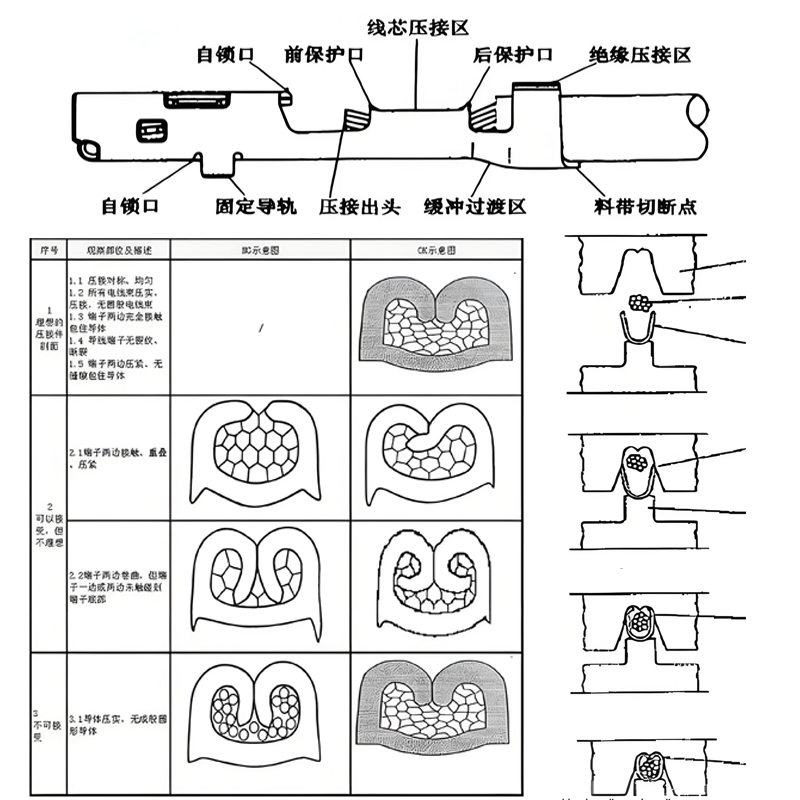
A gas-tight molecular bond between wire and terminal through controlled deformation. Proper crimp height and calibration are essential.
After two decades in the connector industry—starting as a drafting clerk in 2004 to managing technical departments—I’ve realized that most project failures don’t happen on the drawing board. They happen in the “assumptions.” In the world of high-precision connectors, a 10-cent component can ruin a $10,000 machine.
1. The “Pitch vs. AWG” Trap: A Silent Killer
I often see a recurring mistake: engineers trying to force a large AWG wire into a small pitch connector (e.g., forcing 20 AWG into a 1.25mm pitch).
When space is tight, it’s tempting to shrink the connector. But if the wire is too thick for the terminal’s crimping wing capacity, you face three disasters:
- Terminal Stress: The metal wings are stretched beyond their elastic limit, creating micro-cracks.
- Insulation Damage: To fit the housing, the insulation is crushed, leading to future short circuits under vibration.
- The Pull-Force Illusion: It feels tight, but it’s not “gas-tight.” Oxidation will creep in, resistance will rise, and eventually, the connector will melt.
2. The Science of “Cold Weld” Crimping
A wire harness is only as strong as its weakest crimp. A professional supplier doesn’t just “squeeze” a terminal. We calculate the compression ratio to achieve a “Cold Weld” state where the metal molecules actually bond. If your supplier isn’t checking Cpk charts for pull-force, you aren’t buying reliability; you’re buying a gamble.
3. Plating vs. Environment: The “Gold” Illusion
Many default to “Gold-plated” for everything. But do you need 30u” or just a flash? For high-vibration sensors, “Gold Flash” wears through in weeks (fretting corrosion). Conversely, mixing gold on one side and tin on the other creates galvanic corrosion.
4. Material Outgassing: The Invisible Risk
In medical or precision optics, your insulation material must be rated for high-temperature reflow. If not, you’ll face “outgassing”—invisible gases that can ruin delicate lenses or sensors inside your device.
5. Why Teflon (PTFE) Isn’t Always the Answer
PTFE is great for heat, but it has “cold flow” characteristics. Under a tight cable tie, PTFE insulation can “flow” and thin out over time, leading to unexpected shorts. For robotics, we often recommend cross-linked polymers (XLP) instead.
Final Thoughts: You Need an Engineer, Not Just a Vendor
My goal for this site isn’t just to sell parts—it’s to share the hard-won lessons from my 20-year journey.
If you are struggling with connector selection or want to ensure your wire harness design is optimized for reliability, feel free to reach out. I am happy to provide a technical audit for your drawings.
- Visit our website for more technical resources: www.lyd123.com
- Direct Email: nick.xu@lyd123.com
- Global Service: Technical Support | Custom Prototyping | High-Precision Manufacturing
📡 Download Wire Harness Design Guide & Request Engineering Consultation →
Explore our connector selection guide and high-temp motor cable guide for more engineering resources.
Explore our custom cable and harness solutions built to the engineering standards discussed in this guide.
